

Sexism – Warning! Contains Very Strong Language
This post was written with grateful contributions from Laura Bates of the Everyday Sexism Project. The project exists ‘to catalogue instances of sexism experienced by women on a day to day basis’. Laura’s contributions are italicised.

A little while back, I was watching a conversation unfold on Twitter between two relatively respected football bloggers. The conversation was concerned with the use of the word, ‘cunt’. The first blogger was offended by what he perceived as a recent overuse of the word – a word he regarded as the “worst swear word”. The other blogger was defending his own use of the word, claiming he had always used it and that he (and lots of other people) didn’t consider it particularly offensive anymore, even claiming he used it as a term of affection amongst friends. His assertion was that the first blogger was wrong to be offended. As the conversation continued, others got involved, mostly siding with the second blogger, until the conversation inevitably petered out with nothing resolved or learned.
What no-one mentioned throughout the course of the conversation was how innately offensive the use of the word cunt is. We can, I think, assume the bloggers knew what the word “means”, yet the anti-feminist evocation implicit in it’s meaning was at no point discussed in relation to the word’s offensive nature. Now, you could argue that these are just two football bloggers talking on the backwaters of the internet and that it would only flatter them to imply that they represent football as a whole, but this isn’t an isolated use of anti-feminist rhetoric within these, and similar, forums. I’d also argue that the 30,000 followers they share between them (enough to fill a Premiership stadium) – many of whom are younger and impressionable, and whose development as well rounded individuals, they have a great influence over – might benefit greatly from not being subjected to the everydayness of the second blogger’s (and his friends) use of what is considered by many as sexist language.
Sexist language is intrinsically difficult to talk about and create awareness of, because much of it is so deeply woven into the fabric of social intercourse. We are all hyper-aware (I presume) of racist terms that in bygone eras were considered appropriate for everyday use, and that are now recognised as racially oppressive and discriminatory – especially with the prevalence of the subject in football at the moment. The same applies to the words, terms and phrases which have a history heavily anchored in sexism, as Laura explains: “I do understand that some people might use sexist language without intentionally being sexist or even realising that they are being sexist, because so many of these terms, like the attitudes that underlie them, are passed down and ingrained in our everyday lives to such an extent that it is easy to use them without even realising. This doesn’t mean that the individual is necessarily a ‘bad’ or ‘sexist’ person, but I hope that when it is pointed out they might nonetheless reconsider and adjust their language use accordingly, helping us to make a gradual shift away from the normalised acceptance of such terms.” In the same way using racist language doesn’t automatically make you a racist, using sexist language doesn’t make you a sexist; but the hope is that if you became aware of that misuse of language, you’d make a change.
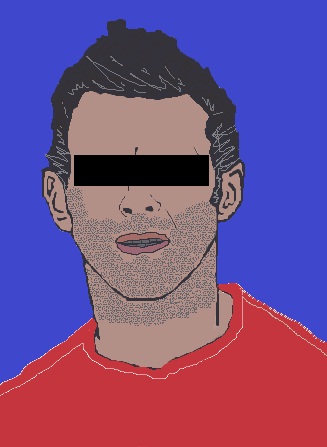
As with racism (and any oppressive ‘ism’), the problem doesn’t simply reside in the offensive words themselves. Language is an arbitrary system, so it’s the inequality brought about historically, through social conditioning – expressed by such words – that is damaging. Language has the power to be discriminatory regardless of whether certain specific terminology is used or not. For example, when the Ryan Giggs story broke, the football community were openly damning of the alleged actions of one of ‘its own’ and, although Ryan Giggs himself was the subject of much abuse, it was the women involved in the news reports that were widely targeted by many within the football community. Even those within the community who were not expressing their opinion using specifically demeaning language were happy to “suggest” what they thought: ‘What kind of person goes after a married man?’ and myriad other examples. In other quarters Ryan Giggs was openly lauded for his alleged actions.
It’s this overt and innert discrimination, that may be the reason for the prominence of sexist language within the male-dominated world of football. Laura details where such inequality lies in a wider context: “There are many sexist words used to describe women that don’t really have male equivalents: Consider the contrast between ‘slut’, ‘tramp’ or ‘tart’ and ‘player’, ‘or stud’ – between ‘old maid’ or ‘spinster’ and ‘bachelor’. Women and men who display the same qualities are frequently labelled in different ways, as many entries to the Everyday Sexism Project testify.Women describe being given gender-specific labels with negative connotations when they work hard or perform well – where, they ask, are the male equivalents for phrases such as ‘ball-breaker’, ‘battleaxe’ or ‘harridan’? Meanwhile labels like ‘doll’, ‘baby’ and ‘sweetie’ infantilise women. And it is impossible to deny the connotations and implications of the language we use to describe women when you realize the overwhelming prevalence of animalistic words we use to suggest that women are base, servile, submissive, dumb, or inferior: “bitch,” “dog,” “chick,” “bird,” “cow,” “pussy,” “hen,” “vixen,” “cougar,” “catty,” “sow,” “lamb,” “whale,” “heifer,” “filly,” “biddy,” “fox.” The list could go on.
Moving away from the more explicitly derogatory sexist terms, football does – by default of existing as an institution within society – carry a lot of linguistic baggage around with it, none more so than with regards to the careers available: we have MANagers, ChairMEN, LinesMEN, GroundsMEN and Kit-MEN, to name a few. As Laura explains, it’s not only in football that we see such default discrimination: “We frequently see examples where language relating to being female is used as a slur or insult – from ‘don’t be such a girl’ to ‘you kick like a girl’ to ‘grow a pair’ to ‘man up’. Though it’s a minor issue, this use of ‘woman’ as ‘insult’ suggests male superiority and reinforces the idea that certain sports or activities are only for men.”
We also have some very prominent phrases in football that help to illustrate the mechanics of sexist language:
“My Gran could do better than that!” This functions as an insult by using the premise that someone is incapable of completing a given task because they are old, but more importantly because they are female. The phrase wouldn’t have the same impact were you to substitute ‘Gran’ for ‘Grandad’, as the ‘Grandad’ would be afforded a certain level of respect on account of being a man. In addition, older men are a social group to be deferred to respectfully; older women are simply invisible, irrelevant. Finally, he, as a man, would without doubt posses an innate ability to kick a football.
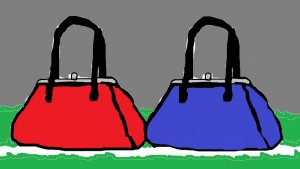
“Handbags!” Used when two players fight in a manner that suggests they are weak, soft and/or pathetic, therefore they MUST be fighting LIKE women. Handbags, being another motif used as a shorthand representation for ALL women.
*Woot-Woo* The “sarcastic wolf whistle” heard around football grounds when a player mis-kicks or loses their footing, suggesting the player’s lack of dexterity and/or ability. The implication is that the player shares characteristics with “the women that men see out and about on the street who they perceive to be ostensibly inviting their sexual advances by the simple act of them breathing”.
“WAGS” This is a relatively recent addition to the football community vocabulary, which was recently sited by the ‘Human Rights Society’ as a pejorative phrase to demean a group of women. The term suggests a particular group of women with no individual identities, whom exist as an inferior sub-section of “civilised” society.
Once again, the list could go on.
Everyone’s reality is different and as I tried to explain during the first post in this series, my intention is to create an exchange of thoughts through careful consideration. People can become defensive, build up walls, during arguments when they feel personally attacked, so I hope, to an extent, I’ve avoided that. If you want to read more on the subject, there are many articles you can search out and read regarding sexist language, including interesting debates on the word ‘cunt’ itself – concerning it’s position within our culture and attempts by feminist groups to “reclaim” it. Sexism is just as serious an issue as racism and any other oppressive ‘ism’. It is not just a subject for “paid up members of the P.C brigade”, without a sense of humour. Over to Laura: “The argument that women who object to derogatory language or insults are ‘humourless’ is a thin one. It is often used to silence women who are hurt or upset by something as the accusation that they ‘can’t take a joke’ somehow suggests complicity from everybody else – if you ‘can’t take a joke’, you are the odd one out – frigid, uptight, overreacting. But the temptation to write off these smaller instances as just ‘a joke’ underestimates the impact that insidious instances of sexism like sexist language can have. These ‘smaller’ things perpetuate sexist ideas and assumptions throughout society, normalising the more serious incidents and making them in turn much harder to tackle.”
As touched on earlier, language itself is arbitrary: it’s the social constructs that shape it and give it its meaning, language isn’t offensive in and of itself. So hopefully, through re-education, a project like Laura’s will one day no longer be necessary. I asked Laura if the response to the project so far had given her hope that sites like Everyday Sexism Project would one day become obsolete?
“Yes – we’ve had an absolutely overwhelming response, from the ten thousand stories that have poured in to hundreds of supportive messages and e-mails from people all over the world – many of them wonderful supportive messages from men saying how glad they are that this is being tackled, how much the site has opened their eyes and how hopeful they are that these issues can be resolved before their own daughters grow up to face them. I hope this response shows that the project has really hit a nerve because we are at a time now, in 2012, where there is a real tidal shift going on – a real sense that people are starting to look around and think ‘no, of course this stuff shouldn’t still be going on – yes it is time to stand up to it and change it.”
It’s a mistake to underestimate the power of language, just as we have been convinced that different races exist – when in fact we all share the same ancestors; the colour of our skin is a consequence of the environment we inhabit, nothing more, we are all one race – it’s these same social, political and cultural constructions that have for centuries managed to very successfully fool us into believing the oppressive illusion that women are inferior to men.
We can’t change His-Story, but we can change Our-Story.
Epilogue: While doing a bit of final editing on this post, Rio Ferdinand tweeted this: “Just asked my little cousin “is that ya girlfriend?” He replied “no, its my project” hahahahaha I’m crying at these young dudes shouts!!
To date, it has received 1517 retweets and 382 favourites.
Rio soon after added: “I’ve told my little cousin he got to respect his lady!! He is a work in progress!! The next generation are nuts!”
A special thank you to Laura Bates for being so helpful and supportive in the creation of this post, and for her work in creating and maintaining the excellent Everyday Sexism Project.


